

Andrew Muir opens up on gun threats, Jamie Bryson and Stormont 'on life support'
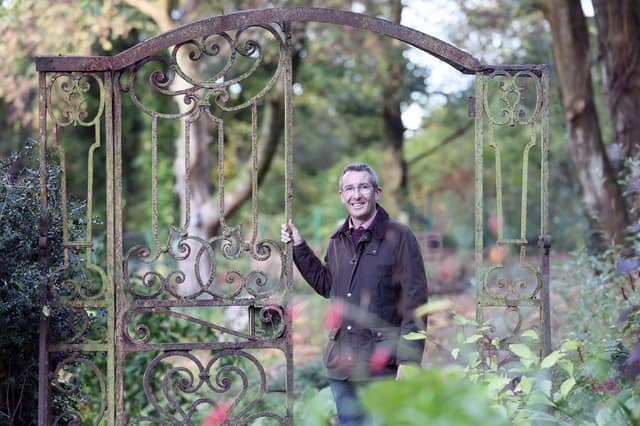

For Northern Ireland’s Agriculture Minister, a former Catholic turned Protestant who stepped into the public eye as an openly gay man almost 30 years ago, the recent wave of homophobic personal attacks feels like an unwelcome flashback
ANDREW Muir concedes that his department could have responded more quickly during the controversial surrounding the Fivemiletown cattle.
The shooting of the 51 animals sparked complaints about how the operation was conducted, with members of the public within earshot.
“Could we have got out more information in regards to it quicker? Yes,” he told the News Letter. “But the department wanted to ensure that the information it published was accurate.”
He says he moved to establish an independent external review on the Sunday after a BBC report on the Friday, and subsequently issued a detailed statement. Ideally, he says, the statement would have come a few days earlier, but he wanted the facts to be correct. He also attended a committee meeting for three hours to answer questions.
The incident prompted death threats, including a message saying he should be shot and left in a ditch.
“Have I got upset? Yeah. Yes, I have,” he says, in an interview with the News Letter.
“When those death threats are coming through and I’ve been assaulted and the pressure just keeps coming at you around it all… I cried.”
He called on the support of colleagues and returned to work. “So there’s two options: do you play on? Or do you quit? And I’m certainly not a quitter.”
The threats against Muir predate the latest controversy. During a Zoom call held in June last year by an organisation discussing proposals for the Nutrients Action Programme, an anonymous comment was posted online: “Anyone got Muir’s address? we could crowd fund a sniper”.
Police investigated but were unable to identify the person responsible.
The language has continued. In a message sent directly to Muir earlier this year, one person wrote: “u should be shot u tramp, don’t have a notion about agriculture”. In a separate comment beneath an Agriland.ie social media post, someone else wrote: “Put a Bullet in Him & leave his body in a field, like his department done with those Animals. Remember The New IRA haven’t gone away you Know.”
The comments are not simply expressions of disagreement with a minister’s decisions. They advocate violence against an elected representative. For Muir, they have become part of a wider experience of abuse that has changed how he lives, where he goes and how he uses social media.
He has spoken of six separate online death threats and an assault in Belfast city centre during the Fleadh earlier this year. The threats have been investigated by police. The anonymous comment about a sniper, however, illustrates the difficulty of identifying those responsible when people hide behind online anonymity.
Muir does not want the threats to define either his work or Northern Ireland. He remains proud of the place he calls home, and believes most people are progressive and inclusive. But he is also worried about a political culture in which personal attacks have become routine, online outrage can overwhelm serious discussion, and politicians appear increasingly interested in performing for their supporters than finding solutions.
“The assembly is now turned into a performative theatre, where people are more interested in TikTok clips rather than proper scrutiny,” he says. “And that’s extended now into the committees. That is not serving the people of Northern Ireland.”
Muir came out as gay in 1996. The abuse he has experienced in public life has brought back memories of the homophobia he encountered in Northern Ireland in the late 1990s.
“It’s been a pretty dark reminder that homophobia is alive and well,” he says. “In doing this job and facing what’s been thrown up in recent times I sometimes recall friends who have taken their own lives partly as a result of the homophobia and transphobia endured. Precious lives of dear friends lost through intolerance and bigotry.”
The social media environment has made the experience particularly difficult. “You see it on social media, you see it like, you know, to an extent that I’ve never seen before,” he says. The threats have made him more cautious about where he goes and have caused him to worry about his personal safety.
One threat described a desire to have him shot and abandoned in a ditch. “So someone posts a post or comment on social media and says, essentially, that they want me shot and left in the ditch. Then it’s rather unnerving,” he says.
He finds it difficult to understand why someone would publish such a threat under their own name. The effect is not confined to the moment he reads a message. He says the experience has changed his behaviour and made him avoid looking at social media. On one Saturday afternoon, he decided to check it. It was a mistake.
“It’s changed how I… what I do in my life and where I go and all the rest of it,” he says. “And I avoid looking at social media.”
The assault took place in Belfast city centre during the Fleadh, a celebration he otherwise describes as an uplifting expression of the society he wants Northern Ireland to become. He says he did not want the incident to overshadow the event. The Fleadh, he says, showed that people from different backgrounds could share a place and celebrate together.
That contrast matters to him. The threats are real, but so are the people he meets through his work who want their government to deliver, their communities to thrive and their neighbours to be treated with respect.
“The issue for me is that I’ve received all of that, okay? And that’s not very pleasant. It’s quite disconcerting. But I have hope. I have hope for Northern Ireland because the job that I do and the people I meet are rather confirming to me that the political debate on what goes on at Stormont is really disconnected from the day-to-day lives of individuals.”
The attacks have also involved claims about his identity. Mischievous rumours have circulated that he wears pink wellington boots and that he is vegan. He says neither is true.
“I’ve never had a pink pair of pink wellies,” he says. “Other things that have been said is that I’m a vegan. I am not a vegan. I eat meat.”
He sees the rumours as part of a broader pattern in which personal characteristics become weapons in political disputes. “I think some of it’s down to the fact that I’m a liberal and progressive minister who is being honest about the challenges and facing up to them.”
The abuse directed at him is not, he says, the only thing that troubles him. He is particularly angry about misogynistic abuse aimed at officials in his department and sectarian abuse against one member of staff.
“The issue that’s annoyed me more, regardless of me, because I’m a public figure - not right, but I understand that this occurs - has been the misogynistic abuse against officials that I’ve got the pleasure of working with in the department. And sectarian abuse against one official. I find that repugnant.”
He is also concerned about how criticism of his handling of agricultural policy has been misrepresented. He has made a point of saying that the majority of farmers he encounters are kind and respectful. He says he has enormous respect for many of those he has met.
“To then see elected representatives deliberately twisting this and saying that I was saying that farmers were sectarian and homophobic and misogynistic was wrong,” he says. He also condemns the sharing of a video mocking the issue.
Muir says political leaders have a responsibility to consider the consequences of their language. He has condemned threats and abuse directed at politicians across the political spectrum, including the treatment of DUP MP Carla Lockhart, which he describes as grotesque.
Disagreement is legitimate, he says; intimidation is not.
He also sees a wider danger in the way individuals can become targets in a politics increasingly shaped by social media. He does not suggest that all criticism of him comes from one person or one political tradition. But he believes the deliberate personalisation of political disagreement is damaging public life and discouraging people from entering politics.
“To turn things into constant personalisation against me or any other people” reflects, he says, both a weakness of argument and a failure to serve the public.
Muir has seen the consequences in his own experience. He says a threat to have him shot by a sniper was made in connection with the Nutrients Action Programme, long before the latest row. He believes that the language used in political debate can create an atmosphere in which such threats become more likely.
The responsibility, he argues, rests partly with those who hold political leadership positions. “People in political leadership have a role to play in terms of their language and how they deal with things,” he says.
He also draws a distinction between legitimate anger about government and the use of that anger to inflame divisions. He understands why people are frustrated with Stormont; he feels that frustration himself. He entered government to achieve things, he says, and it is dispiriting when proposals encounter what he considers irrational and disrespectful barriers.
But Northern Ireland cannot avoid its shared future. “We’ve got to share it. We’ve got to build reconciliation.”
“I recall those killed or injured during the dark days of our Troubles. My mum’s childhood friend Maria McGurk killed in McGurk's Bar bombing. Friends, serving in the police, shot at and bombed and suffering the PTSD till this day.”
Muir himself is not a member of the Orange Order and says he would not join it. His point is not that unionist identity or tradition should be dismissed. It is that the future of unionism, like the future of Northern Ireland, requires more than permanent confrontation.
“My grandmother was in the Orange Order, and she’d be turning in her grave to see some of the stuff that unionism is up to,” he says.
He is clear that he wants the union to be argued for and against on its merits. Asked about the constitutional future, he says: “If people say to me, where do you think the constitutional future is for Northern Ireland? I say to both sides of that argument: persuade me.”
It is a position that puts the onus on political leaders to make a case, rather than treating identity as a fixed instruction to voters.
For Muir, the test is whether a political project can offer a better future for everyone who lives here.
Muir says the threats have been difficult for the people closest to him, particularly his mother. He describes her as resilient but acknowledges that it upsets her to see the way he is treated. “My mum’s a very resilient individual,” he says. “But it does upset her to see some of this being treated and traded in a very strong and personal basis.”
She sees what is said on social media and hears what happens in the Assembly. For a family member, the public nature of the attacks makes it difficult simply to put them out of mind. Muir says he has received support from politicians across the political spectrum, including the Secretary of State. He is grateful for the messages, but does not pretend that they make the experience easy.
“I’m a human being and it’s tough and it’s hard,” he says. “But I’m very lucky to have a supportive family and friends.” He is particularly proud of the officials who work alongside him. Their professionalism, he says, has been a source of strength. He was angered when the Ulster Farmers’ Union called for his permanent secretary and chief veterinary officer to go amid the controversy over agricultural policy.
“When they asked for my permanent secretary and chief veterinary officer to go - how dare they do that,” he says, loudly. “That crossed the line and was totally inappropriate. And I’m still waiting for the apology.”
He does not claim to be unaffected by the threats. He has cried, he says, and there are times when the pressure has been hard to bear. But he is determined not to let those who threaten him dictate whether he continues.
And if those who want him gone expect the threats and calls for his resignation to persuade him to leave, Muir has a short answer. “Sorry, I am going nowhere.”