

Augher man jailed for murdering and dismembering friend loses appeal
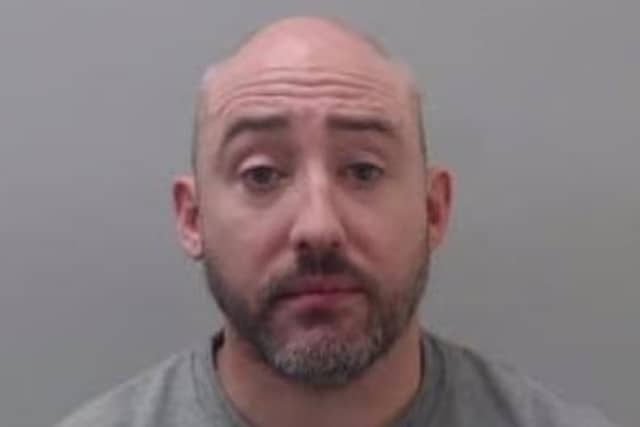

An Augher man jailed for murdering and dumping his dismembered friend’s body in a reservoir has lost a legal battle to overturn his conviction.
An AUGHER man jailed for murdering and dumping his dismembered friend’s body in a reservoir has lost a legal battle to overturn his conviction.
Court of Appeal judges rejected claims that Stephen McCourt, 42, was wrongly found guilty of killing Damien Heagney.
“The numerous strands of evidence all pointed towards the appellant’s guilt,” Lady Chief Justice Dame Siobhan Keegan ruled today, Wednesday.
McCourt, of Riverview in Augher, is currently serving a minimum 24-year sentence imposed after a jury found him guilty of the murder.
Mr Heagney, 47, from Cookstown, was last seen alive on December 31, 2021. Specialist divers recovered his partially dismembered remains from Cappagh Reservoir in August 2022.
Prosecutors argued McCourt had stabbed him to death following a quarrel. He then placed the body parts in plastic bags and threw them into the water in a bid to cover up his crime.
Even though the exact cause of death could not be determined due to decomposition, post-mortem examinations identified possible knife wounds to Mr Heagney’s head, neck, arms and legs. His family described the nature of the killing as “depraved”.
Circumstantial evidence against McCourt included a smear of Mr Heagney’s blood found at his home and a witness report of him putting a stained carpet in the rear of a van.
Bolt cutters associated with the defendant were forensically linked to wire used to wrap the deceased’s remains
In early January 2022, the vehicle registered to McCourt was sighted at the scene where the body was dumped.
Another witness also said they had dropped Mr Heagney at the defendant’s property on New Year’s Eve.
With cell site analysis placing the deceased’s phone in that area at the time, he was never seen alive again.
McCourt did not give evidence at trial but made a statement denying that he had murdered or caused any harm to Mr Heagney.
Confirming the victim was a regular visitor at his home, he claimed to be unclear about when they were last together due to the passage of time.
During the appeal, defence lawyers insisted there had been a viable alternative suspect, an anonymised individual referred to as ‘Person A’ Information was said to have been provided to police that the murder had been made to look like a republican-related killing when it had to do with drugs.
McCourt’s legal team argued a policy of neither confirming nor denying (NCND) requests for any disclosure on Person A being a potential PSNI or MI5 agent undermined his right to a fair trial.
But the court held that the trial judge correctly prohibited questioning of a police witness on that issue because it was irrelevant and would have introduced speculation.
“There was nothing unlawful about the application of NCND in this case,” the Lady Chief Justice said. “The issue was whether (Person) A could have committed the murder.
“The defence was able to raise this issue fairly and squarely in cross examination of the police witness and the jury were also given information in the agreed note which covered this issue.”
Rejecting further claims about an abuse of process and the handling of telecommunications evidence, the three appeal judges described it as a strong circumstantial case against McCourt.
“When considered cumulatively, the strands of evidence in this case were a solid foundation upon which the jury could find the appellant guilty,” Dame Siobhan confirmed. “Accordingly, we consider that the conviction is safe.”