

Cost-of-living in Mid-Ulster driving food bank use
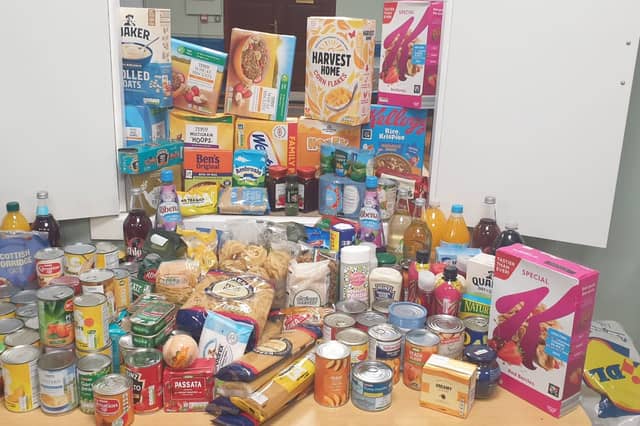

New figures have highlighted the scale of child poverty in Mid Ulster, with calls for greater action as local families continue to struggle with the rising cost of living
WORKING families with both parents in full-time employment are turning to local food banks for help as rising childcare costs and everyday expenses leave households struggling to make ends meet.
Fergal O’Donnell, a volunteer with Coalisland Food Bank, said the service was supporting an increasing range of people, challenging the misconception that food banks are only used by unemployed people or those on very low incomes.
“Recently we have had a lot of young married couples, both in full-time work, who are struggling to make ends meet because of childcare costs,” he said.
His comments come as new figures from the Joseph Rowntree Foundation (JRF) highlight the scale of child poverty in Mid Ulster, where one in five children are growing up in poverty.
The foundation’s Poverty in Northern Ireland report estimates that almost 90,000 children across Northern Ireland are living in families struggling to make ends meet, with little change in the proportion of children experiencing poverty over the past two decades.
The figures have renewed calls for greater action to tackle financial hardship, with local food banks continuing to provide essential support to families affected by the rising cost of living.
The Coalisland Food Bank was established during the Covid-19 pandemic as a temporary measure to support people struggling financially. It has since become a permanent community hub, offering assistance to people from a range of backgrounds.
Independent Torrent DEA councillor, Dan Kerr, who is actively involved with the Coalisland Community Hub and Food Bank, said the service had become increasingly important as households faced mounting financial pressures.
“The Coalisland Food Bank was first established during Covid as a temporary measure to help local people who were struggling with the cost of living. It was then kept open as a permanent hub for people struggling to make ends meet.
“The Food Bank and Community Hub can be used at each individual’s discretion, no questions asked. People from all types of backgrounds use the food bank, from lower income families right up to the middle class as the cost of living is affecting everyone.”
Fergal said families made up the largest proportion of those accessing the service, although older people and young couples were also seeking support.
“The main demographic coming to us is definitely families but there are also a lot of older people and young couples who come due to the cost of living. We welcome anyone who needs help no matter what the circumstance.”
He said the service operated on a non-referral basis, allowing people to seek assistance directly without having to obtain a referral from another organisation.
“We work on a non-referral system so anyone that needs assistance can come directly to us with no questions asked.
“The demand fluctuates depending on the season, but as Christmas approaches we find that it gets busier.”
Despite the growing need for support, Fergal said some people remained reluctant to approach the food bank because of the stigma associated with asking for help.
“There is a lot of reluctance and stigma around using the food bank but it takes a brave person to ring up and make the call.
“We are here to help in times of need and the aim is to help people until they are able to get back on their feet again.”
The food bank has also expanded its work beyond providing food, introducing a social café and a pre-loved school uniform exchange to help families manage additional household costs.
Fergal said the uniform exchange was particularly valuable for parents who struggled to afford replacements as their children grew or needed new school clothes and PE kits.
“Around January or February time, parents will come to us if their child has grown out of their uniform or they need replacements because they are so expensive to buy from new.
“I think the Board of Governors should be ashamed of themselves for how expensive school-branded uniforms and PE kits have become.”
The additional services reflect the wider financial pressures facing families, with the cost of raising children extending beyond food and household bills to childcare, clothing and education-related expenses.
The latest JRF analysis puts child poverty in Mid Ulster above the Northern Ireland average of 19 per cent, prompting renewed calls for the Stormont Executive to make tackling child poverty a priority.
In May 2025, the Executive agreed a draft anti-poverty strategy, ending a 19-year delay following the legal requirement introduced by the 2006 St Andrews Agreement. However, the draft was criticised by almost 50 Northern Ireland charities, which argued that it did not fully address the needs of people experiencing poverty.

Mid Ulster District Council is also reviewing its existing support for households experiencing financial hardship.
In September, councillors unanimously backed a motion calling for an immediate review of current cost-of-living initiatives. The review is expected to consider whether existing support can be strengthened, whether additional resources are required and what further measures could be introduced during the winter.
Kerr said he believed the council was doing what it could within its limited powers, but argued that more substantial action was needed at Stormont.
“I believe the council are doing all they can to minimise the impact of poverty on our local communities. They are limited in what they can do, but if we look at Stormont it is clear that their measures are not going far enough. We have been given heating vouchers and some other aids but ultimately it’s not enough.
“MLAs have been given a pay rise while our minimum wage workers are receiving only a fraction of that. Strikes have been threatened across the region over pay and people are struggling. Stormont is only a sticking plaster for the issue.”
The food bank relies on donations from local businesses, schools and organisations, including Moy Park, Dunbia, Dungannon Hygiene Bank and local shops and schools.
Fergal said this support enabled volunteers to provide essential supplies to people facing difficult periods, although demand could vary significantly from week to week.
“We want to help people while preventing a reliance on our services. We try to plan in advance but there could be fifty people visiting one week and five the next.”