

500 people every week turn to Dungannon Hygiene Bank as cost-of-living-crisis tightens grip
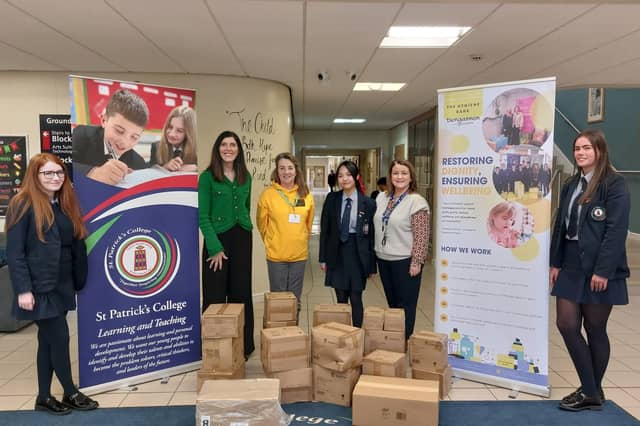

Dungannon Hygiene Bank is supporting around 500 people every week as it issues an appeal to local businesses to hold workplace collections, set up donation points or donate essential products this Christmas.
DUNGANNON Hygiene Bank is appealing to local businesses and the wider community to donate essential toiletries and personal care products, with nappies, toilet paper and washing detergent among the items particularly needed as demand for support continues to grow.
Project coordinator Eileen Brown says the service is supporting around 500 people every week, as individuals and families across the area struggle to afford basic hygiene essentials.
Often hidden behind the pressures of everyday living, hygiene poverty remains one of the most stigmatised and overlooked consequences of financial hardship.
Hygiene poverty refers to the inability to afford or access basic personal hygiene and household cleaning products, including shampoo, toothpaste, soap, deodorant, sanitary products and washing detergent.
“The Dungannon Hygiene Bank currently works with 17 community partner organisations, including seven schools in Dungannon and other organisations across the area,” Eileen told the Courier.
Eileen said the bank relies heavily on donations from the local community to ensure it can continue providing essential products.
“I can only give out the product that I’ve got and we are dependent on the generosity of local people who help us provide support to those who need it.”
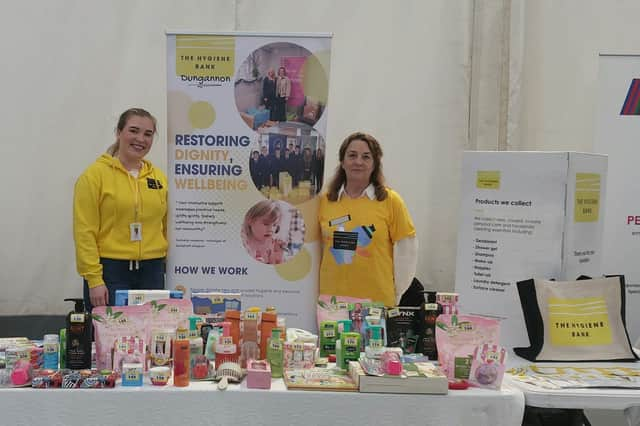
“When my community partners apply, they tell me how many adults and children they are supporting - whether that’s a school or organisation, and from looking at my applications, I can tell you that we are helping in the region of 500 people every single week.”
Eileen said hygiene poverty can affect anyone, regardless of their age or circumstances, but warned that children can be particularly vulnerable to its effects.
“The issue of hygiene poverty in our local area can affect anyone but it can be particularly hard for school children. It's often a vicious cycle of stigmatisation which can result in children being bullied because they maybe haven’t been able to wash in a few days.”
Figures from The Hygiene Bank show that 33 per cent of children are at risk of being bullied at school because of hygiene poverty, while 91 per cent of teachers believe these children face a high risk of bullying through no fault of their own.
However, the impact of hygiene poverty extends far beyond the classroom, with a lack of access to basic facilities also affecting people's employment prospects and everyday lives.
“We had someone tell us they were going for a job interview, so they went to a local gym to have a shower because they didn’t have hot water at home to wash beforehand.”
The impact of financial hardship can also force families into heartbreaking situations, as Eileen recalled: “We had a single mum come to us in tears because she was washing her three children’s clothes in water because she couldn’t afford washing powder.”
With Christmas approaching, Eileen is appealing to local businesses to help the Hygiene Bank meet growing demand for essential products.
“My aim for Christmas would be to get the message out there. I want local businesses to get involved, whether they make financial donations, donate products, have a workplace collection or create a collection point within their business.”
The Hygiene Bank currently needs a range of everyday essentials including shampoo, conditioner, shower gel, toothpaste, toothbrushes, shaving products, sanitary products and deodorant.
Nappies, toilet paper and washing detergent are also in particularly high demand.
Eileen said the issue can often remain hidden because people may be too embarrassed to ask for help.
“Hygiene poverty can be hidden. People might just be managing to put food on the table but they’re really struggling. There’s a stigma attached to that and people can be quite embarrassed to talk about what they are going through.”
She urged anyone struggling to afford basic hygiene products not to feel ashamed about seeking support.
“Please don’t feel embarrassed and please don’t feel that you have failed in any way. We believe that everyone deserves to feel valued and as individuals to feel clean and so there is absolutely no shame in it.”
Donation bins are available at Newell Stores in Dungannon and Coalisland, as well as in most Boots stores across the area.
Members of the public can purchase an essential hygiene product and leave it in one of the donation bins. Eileen then collects the donations and distributes them through the bank's network of community partners.
“Our message at Christmas is very simple - Be kind. Think about the people who through whatever circumstances aren’t having the same Christmas you are having. Everyone deserves to be clean, no matter what is going on.”
She added: “We can’t just be sympathetic to this issue, we need to find a solution and I think when the local community comes together we can do great things.”
Anyone interested in holding a donation event, receiving a donation bin for their workplace or supporting the Dungannon Hygiene Bank can contact the Dungannon Hygiene Bank Facebook page or Eileen on 07411139550.